Step by step: connect pronubes Edge to Microsoft Fabric via MQTT
From the machine value to the Eventhouse table.
This guide shows how pronubes Edge sends machine data as JSON messages to an MQTT broker, how Microsoft Fabric subscribes to the topic through an Eventstream and how the data lands in an Eventhouse table. The example uses a simulated filling machine whose values are read via OPC UA.
- A running pronubes Edge instance with access to the machine data, OPC UA in this example
- An MQTT broker, such as HiveMQ Cloud, EMQX or a self-hosted Mosquitto
- A Microsoft Fabric account with an active Fabric capacity or trial
- Network connectivity from pronubes Edge to the broker and from Fabric to the broker
Configure pronubes Edge
In pronubes Edge you connect the data source, set up the connection to the MQTT broker and build the flow that publishes the JSON message.
Configure the OPC UA plugin
- Open the pronubes Edge configuration.
- Add an OPC UA plugin and configure the server endpoint, authentication and security settings.
- Test the connection to the OPC UA server.
- Identify the machine values to send.
In the example, pronubes Edge reads State, ProducedCount, ScrapCount, Temperature and Pressure from a simulated filling machine.
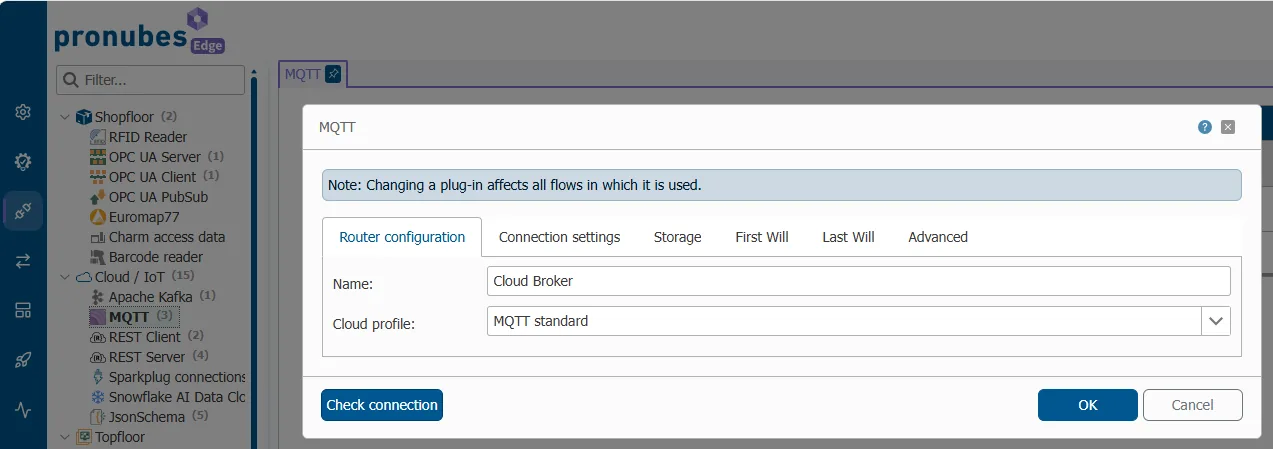
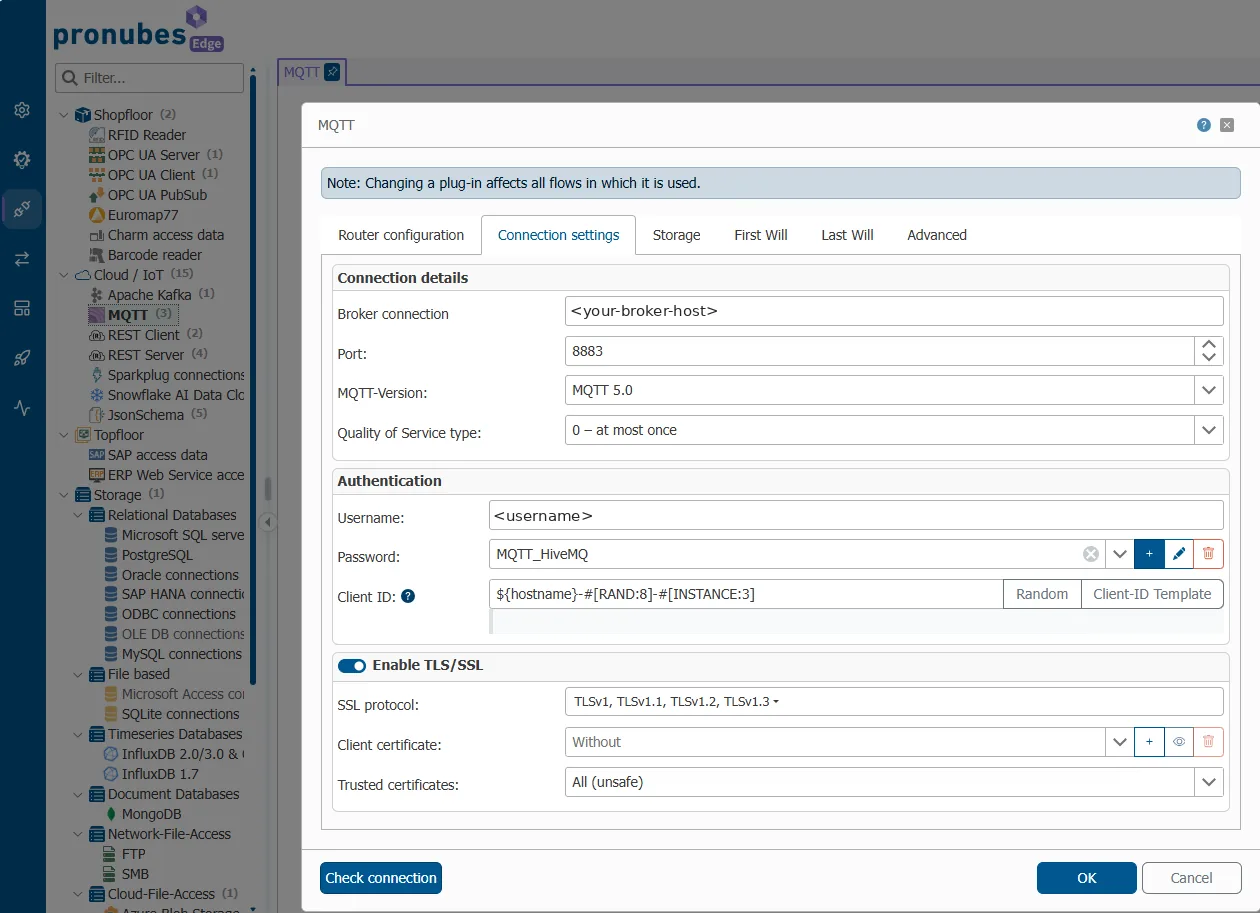
Configure the MQTT plugin
- Add an MQTT plugin.
- Enter the broker address and credentials.
- Configure the MQTT version and TLS.
- Save the plugin and verify the broker connection with Check connection.
| Setting | Value in the example |
|---|---|
| Broker | HiveMQ Cloud |
| MQTT version | MQTT 5.0 |
| Port | 8883, TLS/SSL enabled |
| Authentication | Username and password |
| Quality of Service | 0 – at most once |
Note: Use the credentials and security settings of your own broker.
Create the flow
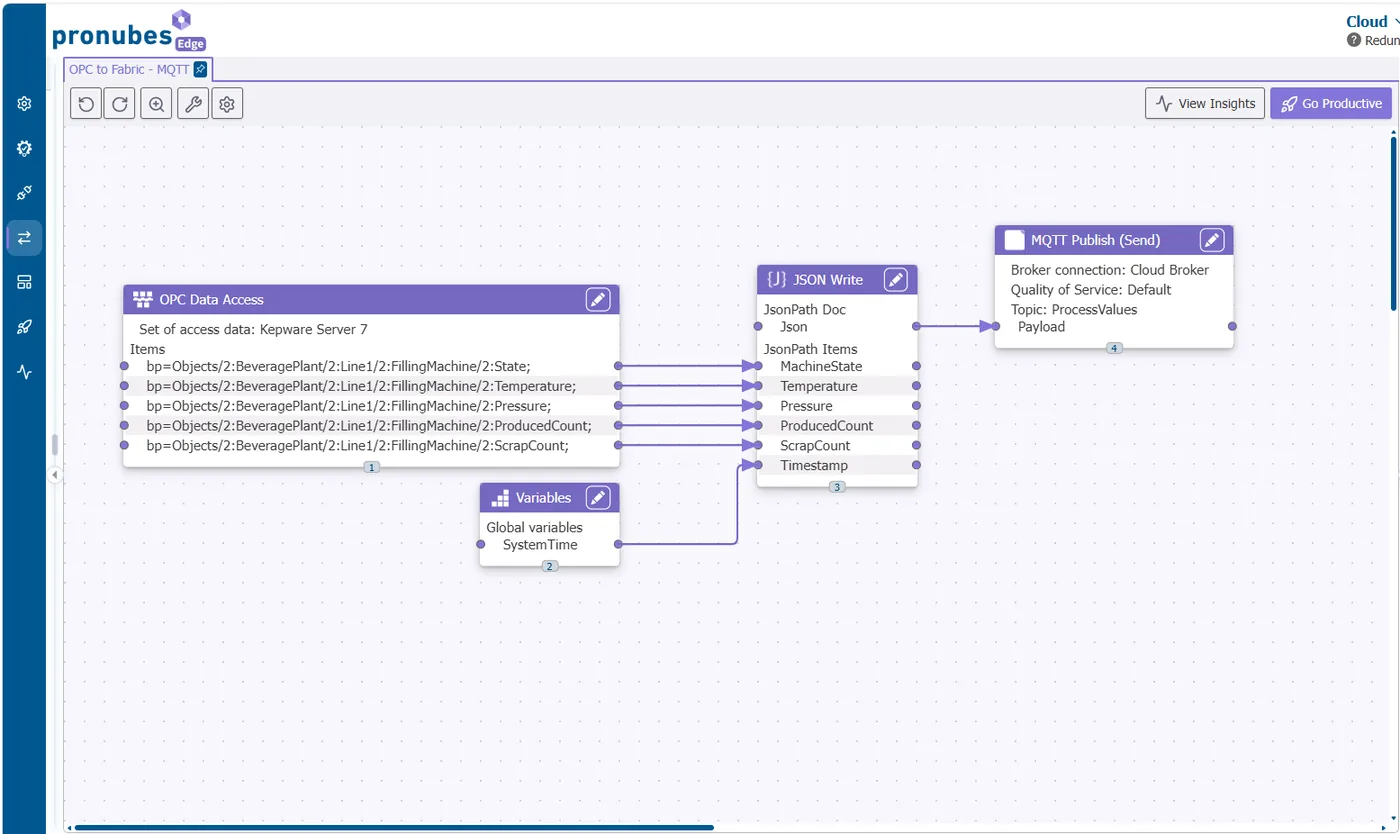
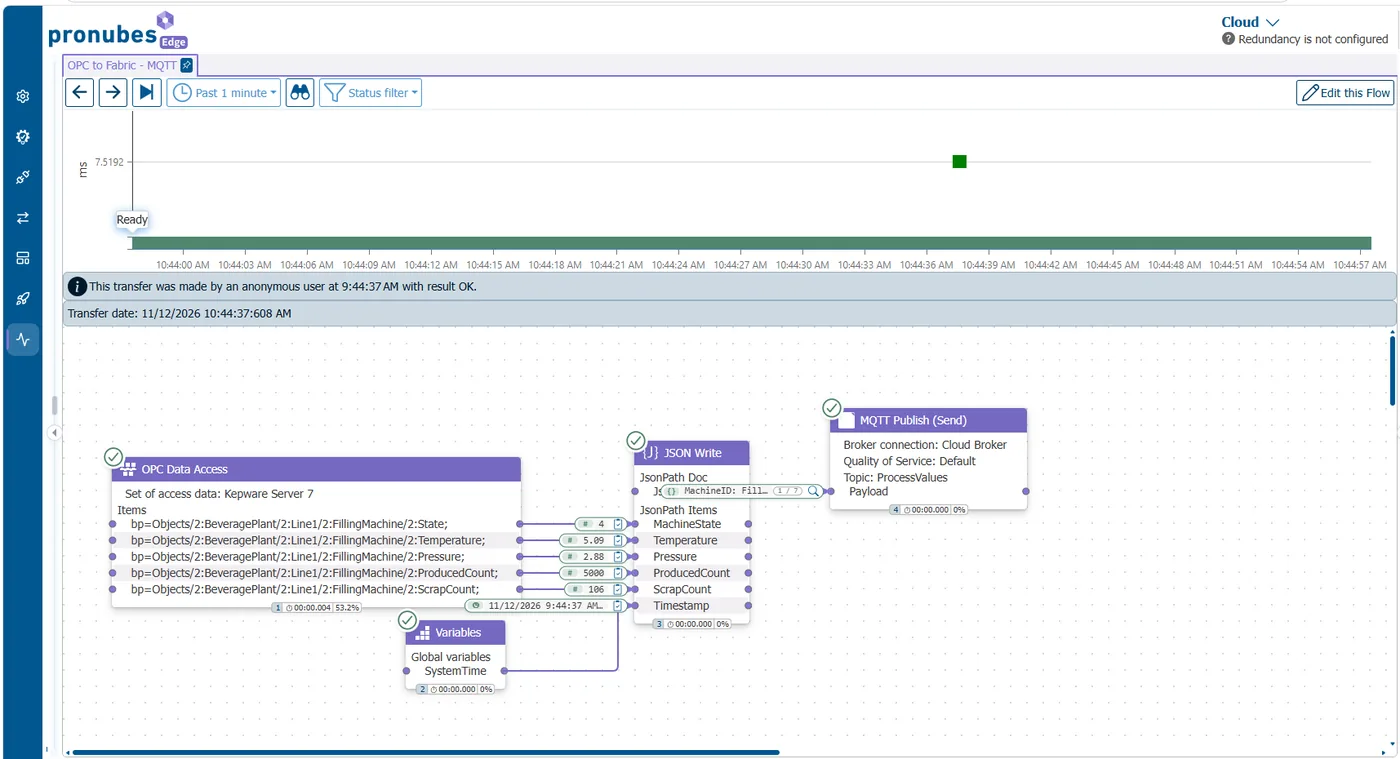
- Create a new flow in pronubes Edge.
- Add an OPC UA transfer object containing the required machine values.
- Add a Variables transfer object to provide the system time (
SystemTime). - Add a JSON Write transfer object to build a structured JSON message.
- Connect the OPC UA values and the system time to the corresponding JSON fields.
- Add an MQTT Publish transfer object and set the topic to
ProcessValues. - Connect the JSON output to the Payload input.
- Set the flow live with Go Productive.
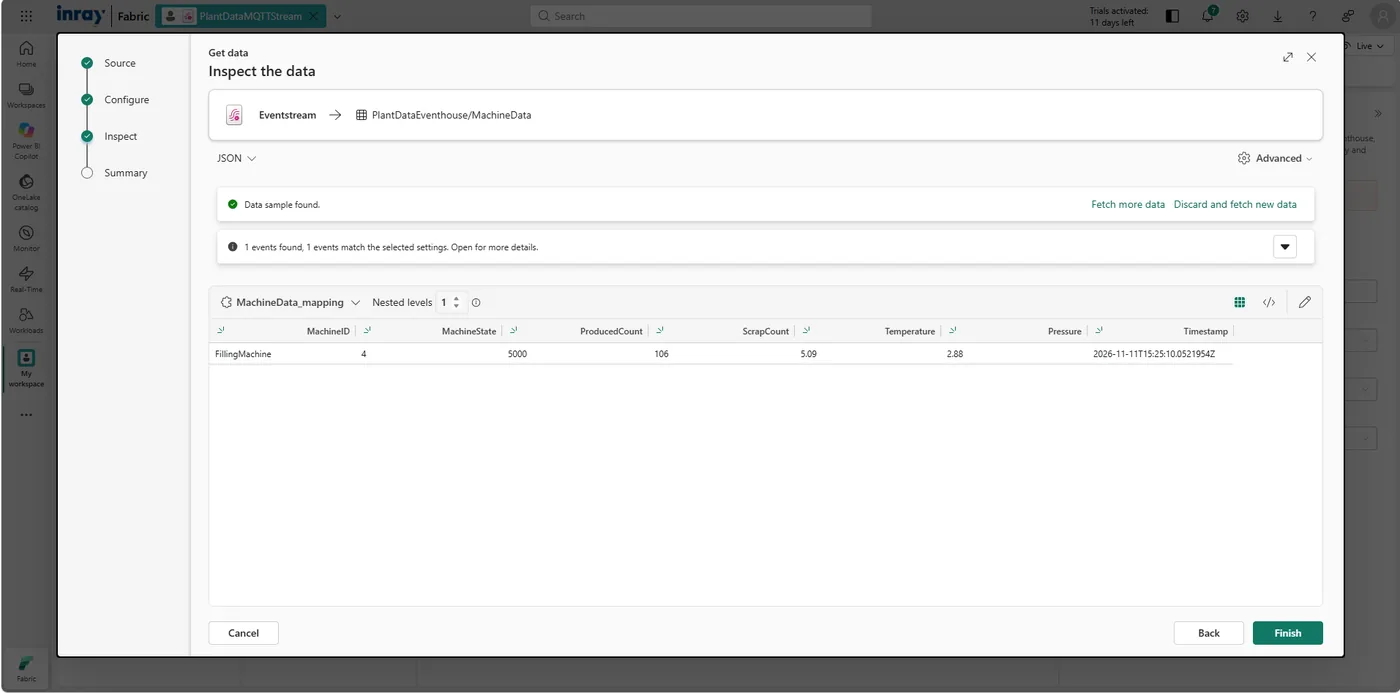
The JSON message contains MachineID, MachineState, ProducedCount, ScrapCount, Temperature, Pressure and Timestamp.
Configure Microsoft Fabric
In Fabric you create a workspace, an Eventhouse and an Eventstream. The Eventstream subscribes to the MQTT topic and writes the messages to a table.
Create a Fabric account and workspace
- Open app.fabric.microsoft.com.
- Sign in with a Microsoft work or school account. If you do not have one, follow Microsoft’s account onboarding process.
- If eligible, activate a Fabric trial from the profile menu, or use an existing Fabric capacity.
- Select Workspaces → New workspace.
- Enter a name, for example
PlantDataWorkspace. - Assign the workspace to the trial or your capacity and create it.
Good to know: The workspace is where you create and manage Eventstreams, Eventhouses and other Fabric items.
Create an Eventhouse
- Open the workspace.
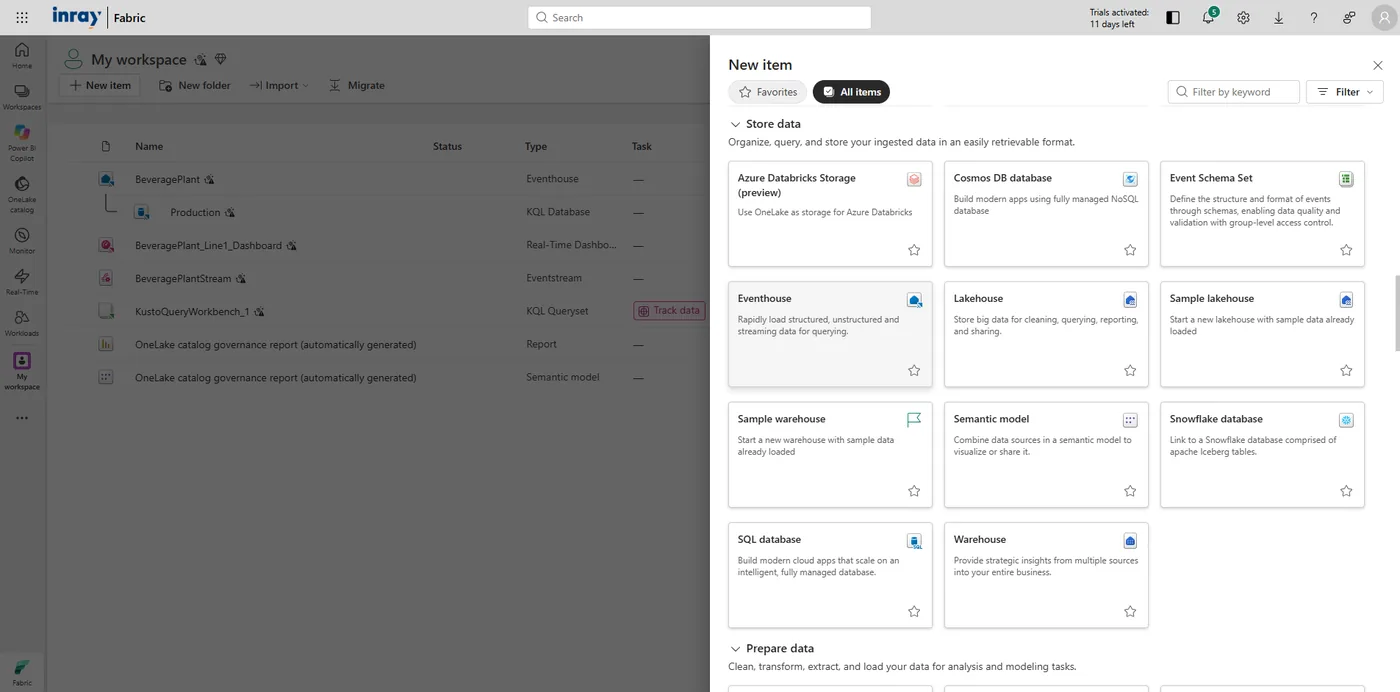
- Select New item → Eventhouse.
- Enter a name, for example
PlantDataEventhouse. - Select Create.
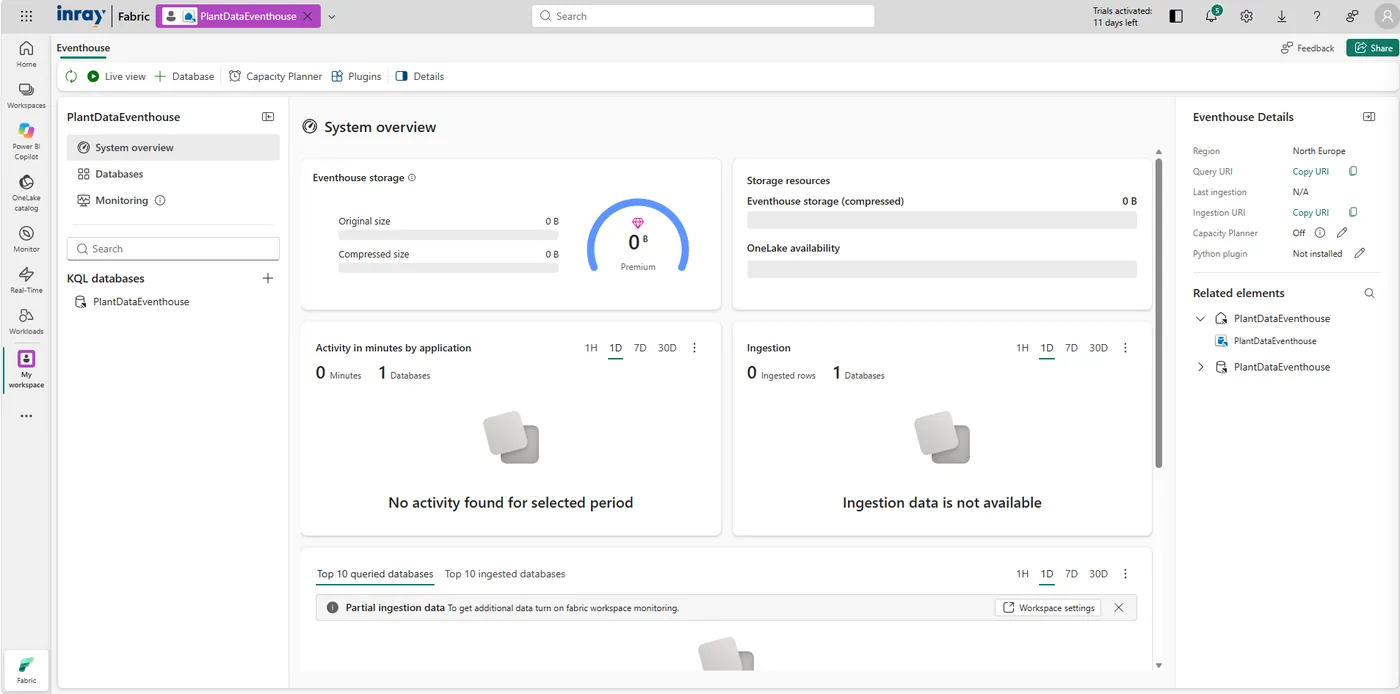
Fabric automatically creates a KQL database inside the Eventhouse. It will hold the table for the machine data.
Create an Eventstream
- Return to the workspace.
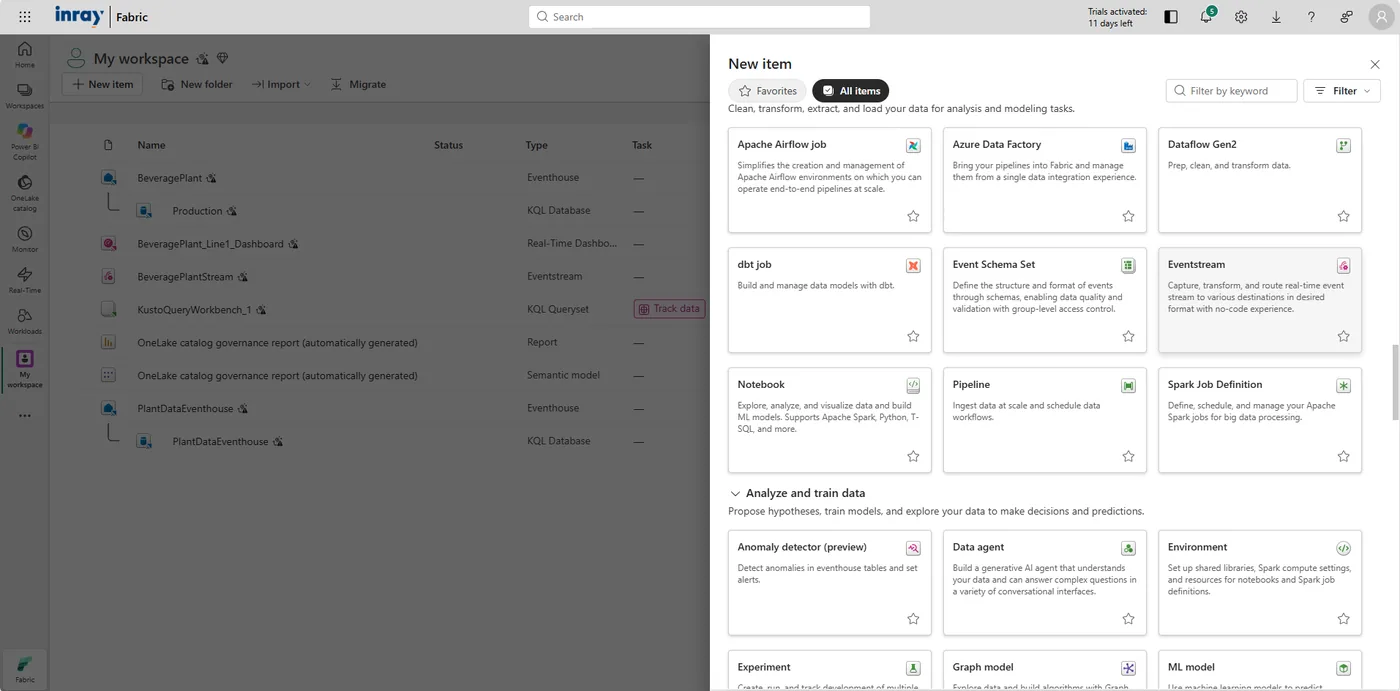
- Select New item → Eventstream.
- Enter a name, for example
PlantDataMQTTStream. - Select Create.
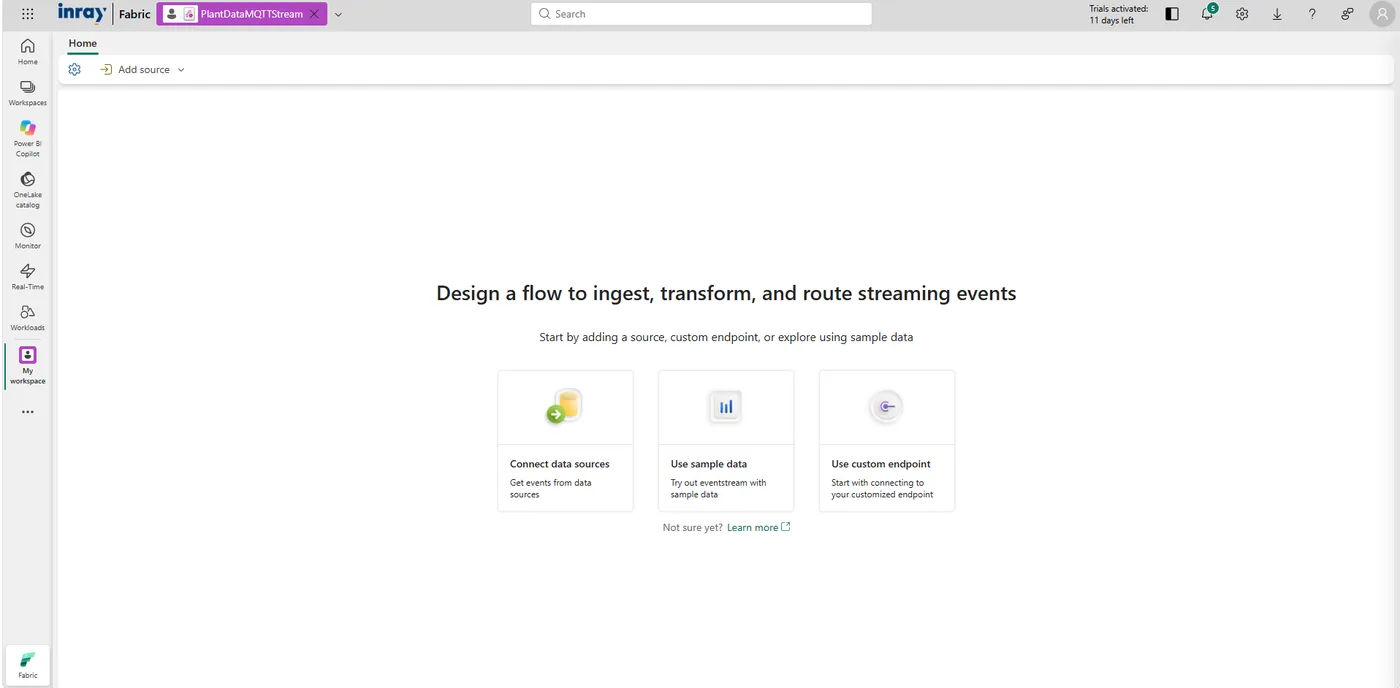
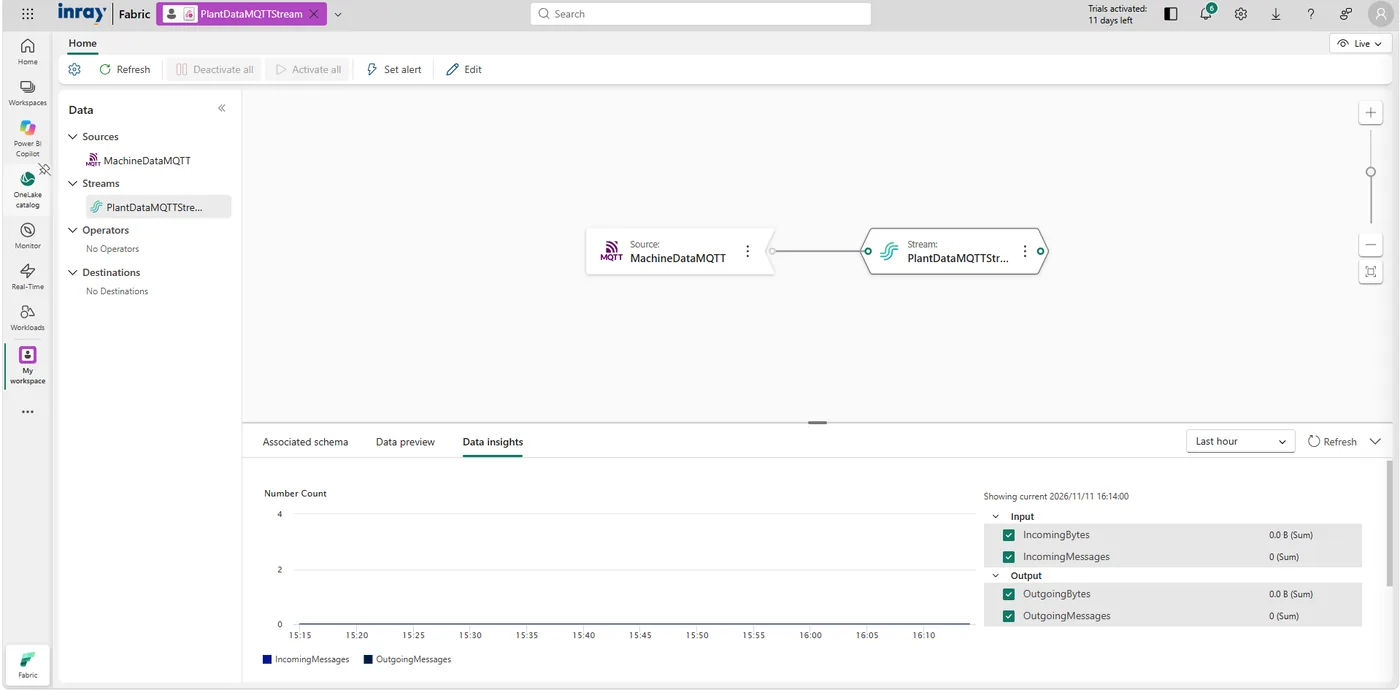
An Eventstream receives incoming events and routes them to a configured destination.
Add the MQTT source
- Open the Eventstream editor.
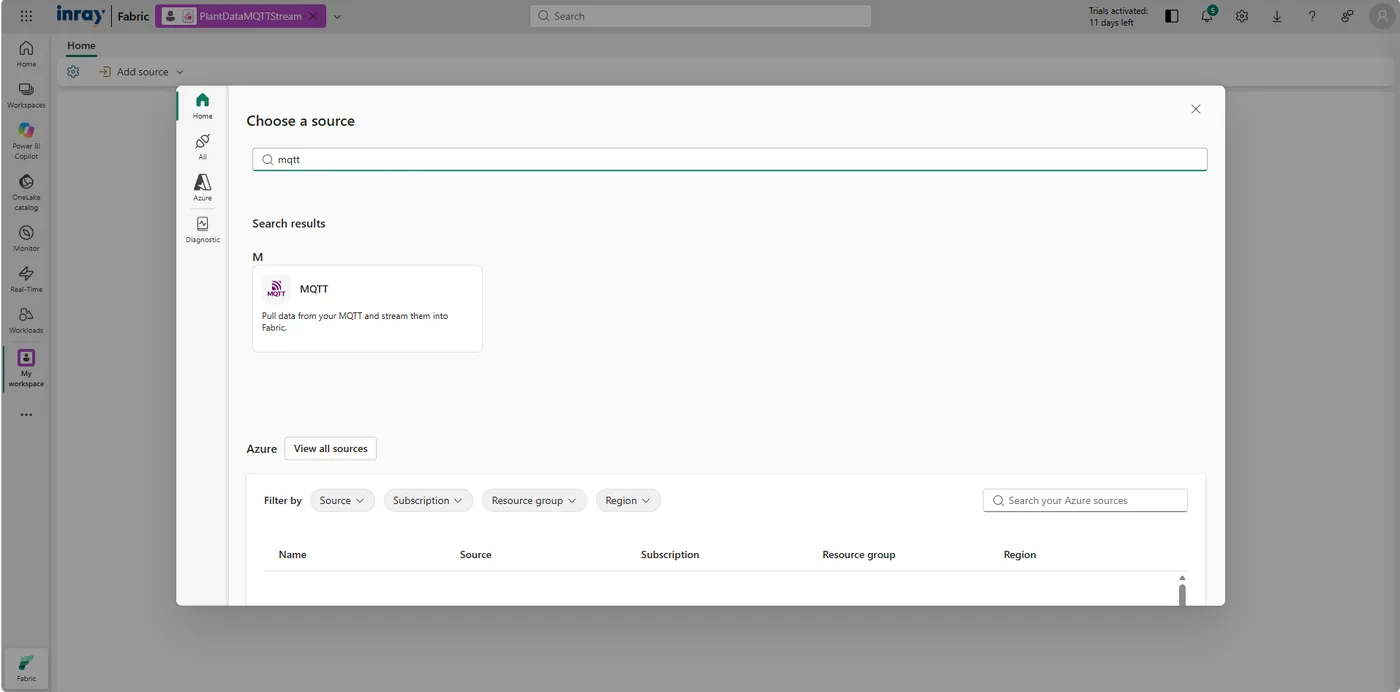
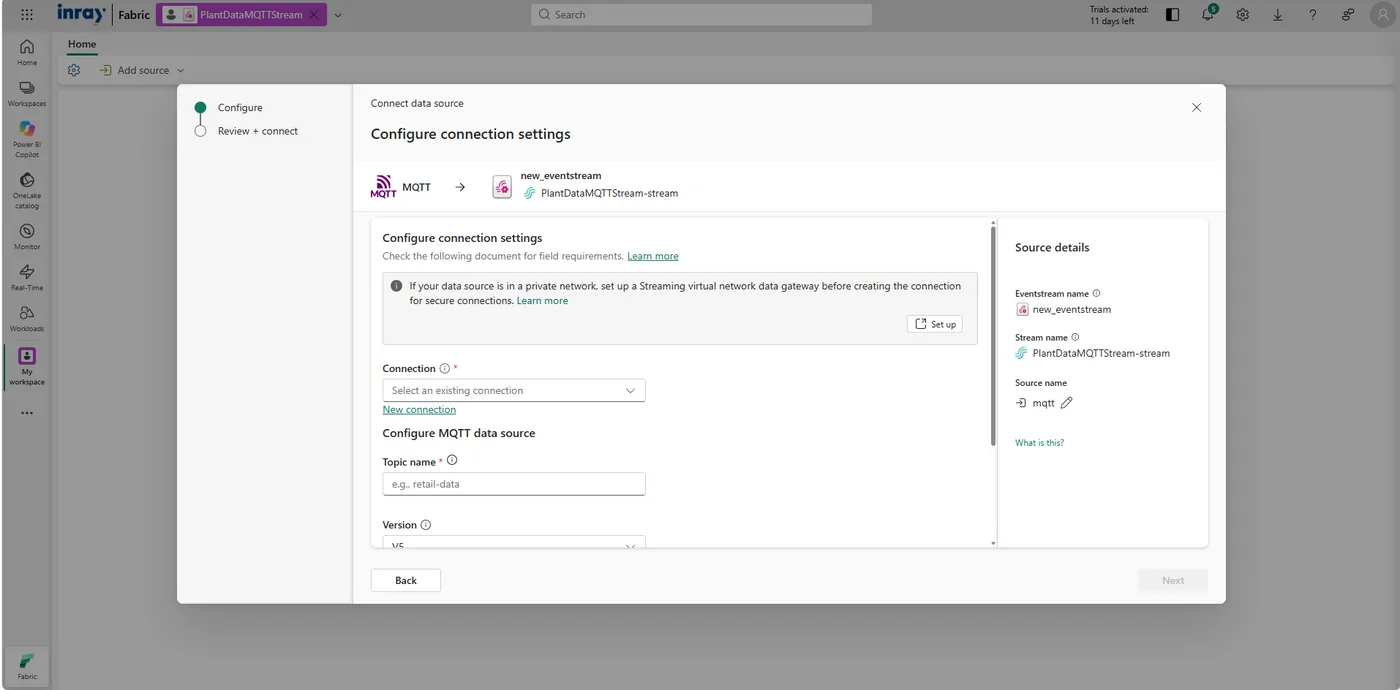
- Select Add source → Connect data sources → MQTT.
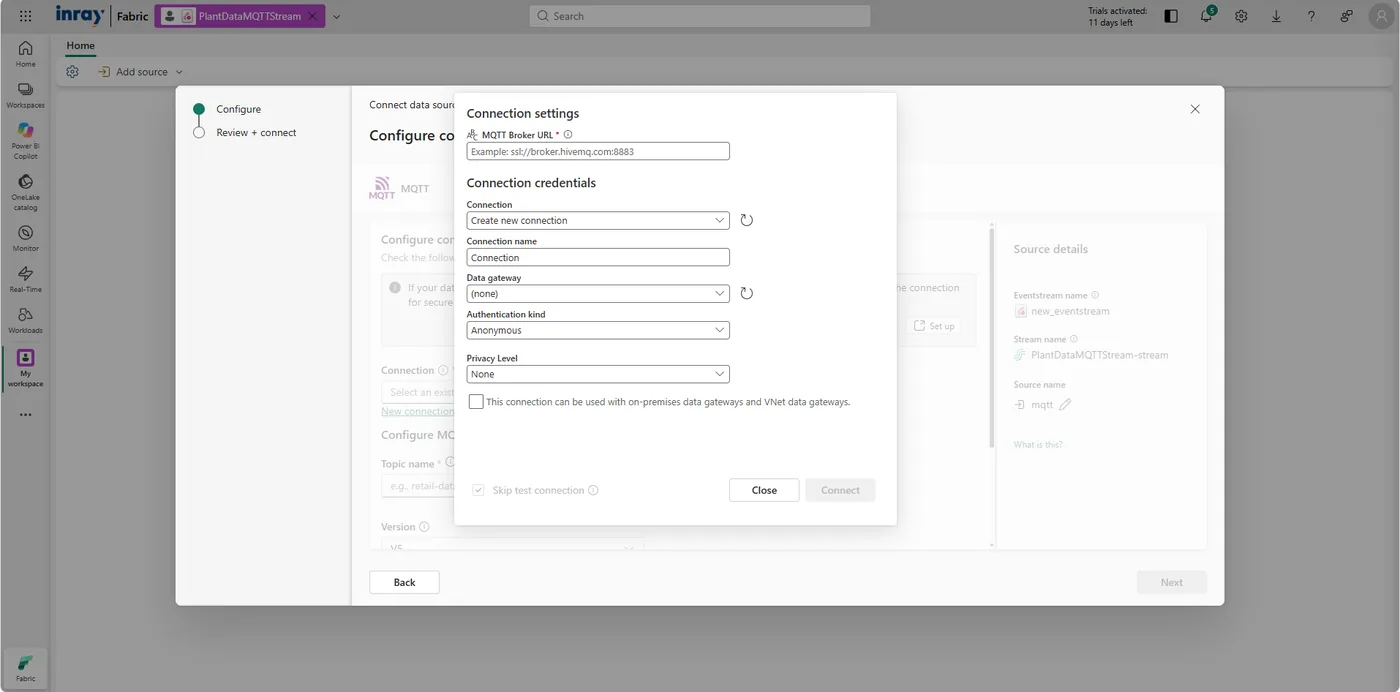
- Select New connection.
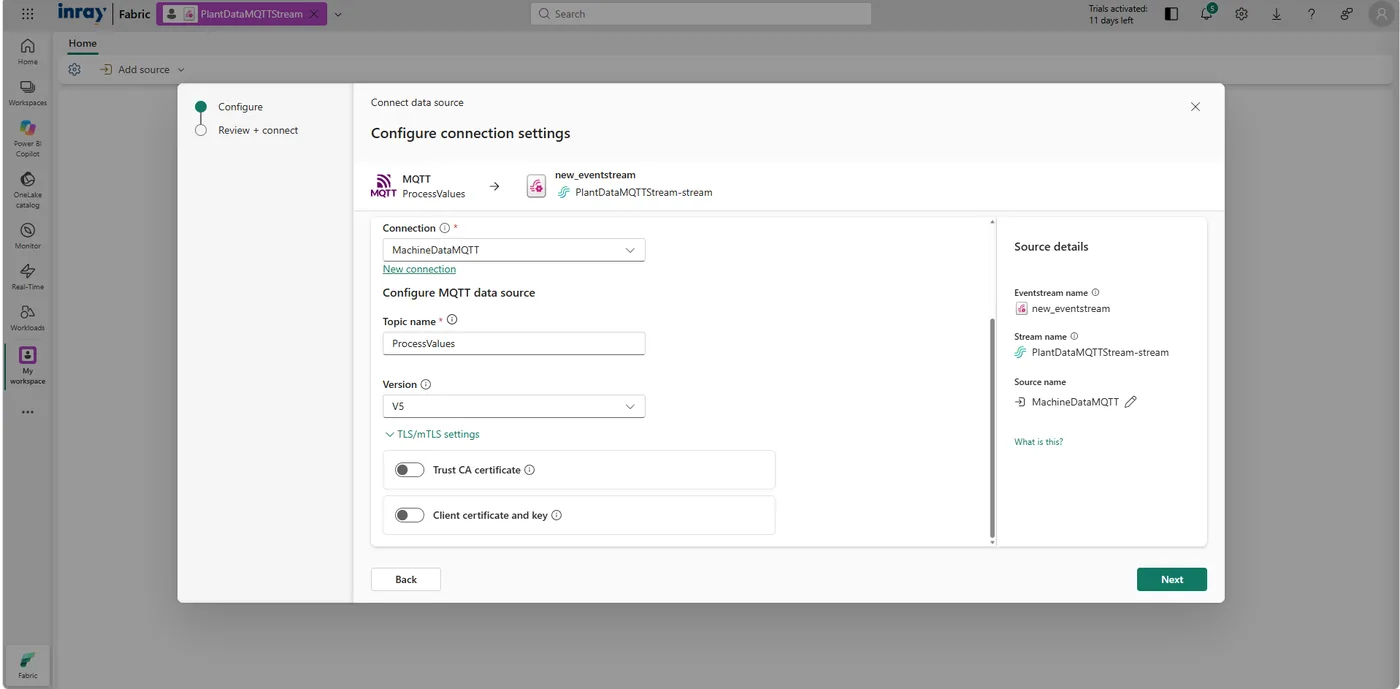
- Enter the details of your MQTT broker (see table).
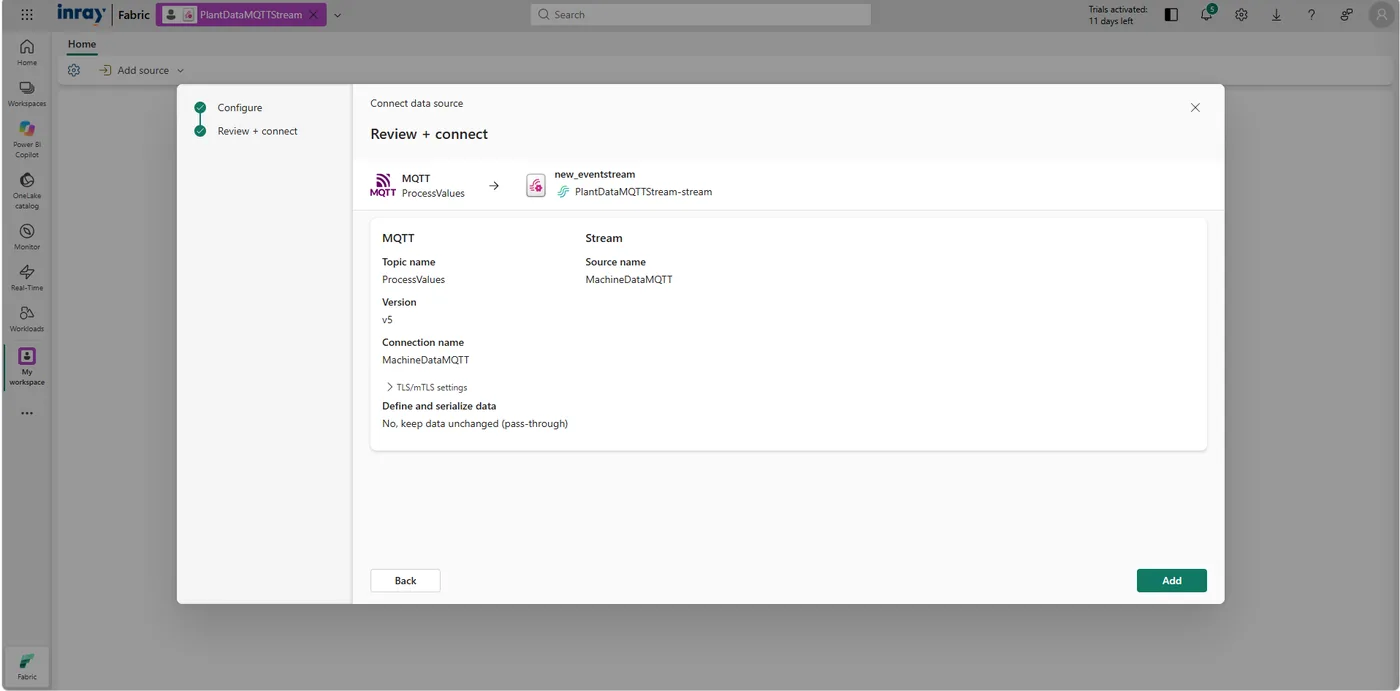
- Select Connect, complete the source configuration and select Add.
- Select Publish to apply the Eventstream changes.
| Setting | Example |
|---|---|
| MQTT Broker URL | ssl:// |
| Authentication | Broker username and password |
| Topic name | ProcessValues |
| Version | V5 |
| Source name | MachineDataMQTT |
Important: Topic and MQTT version must match the pronubes Edge configuration exactly. The broker must be reachable from Fabric.
Configure the Eventhouse destination
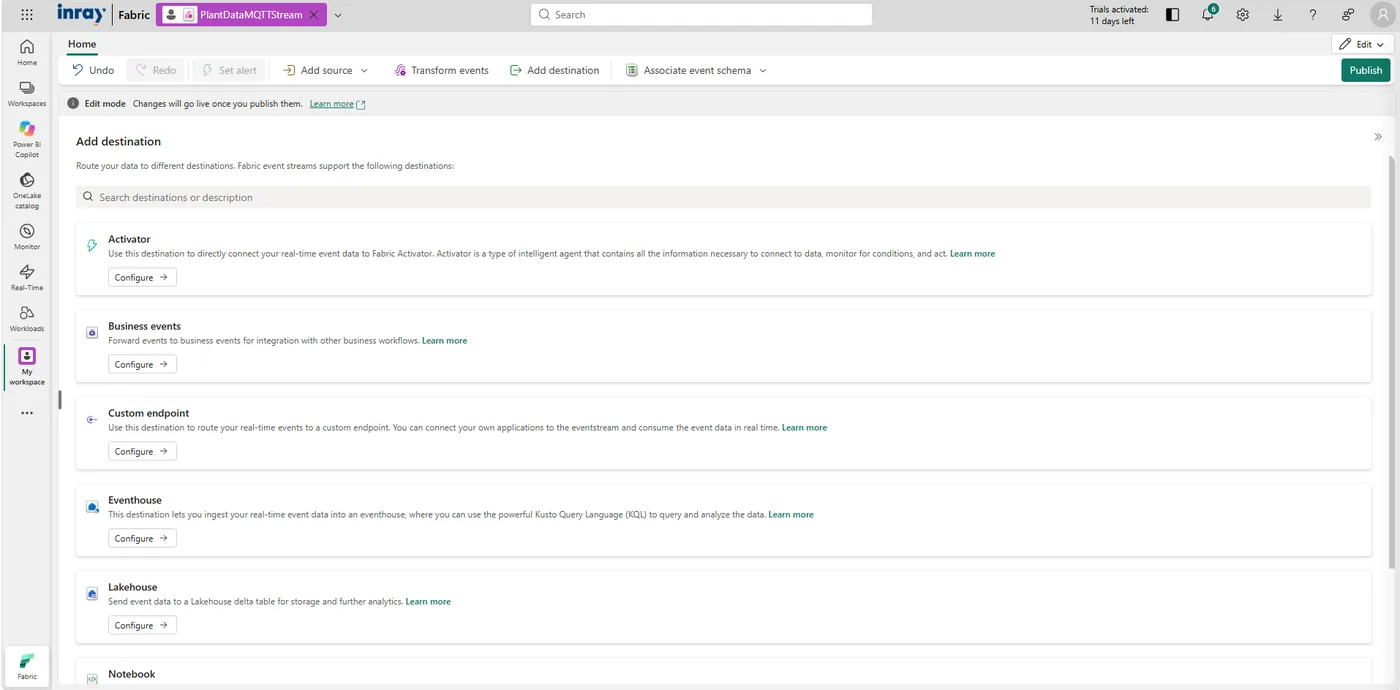
- Open the Eventstream in Edit mode.
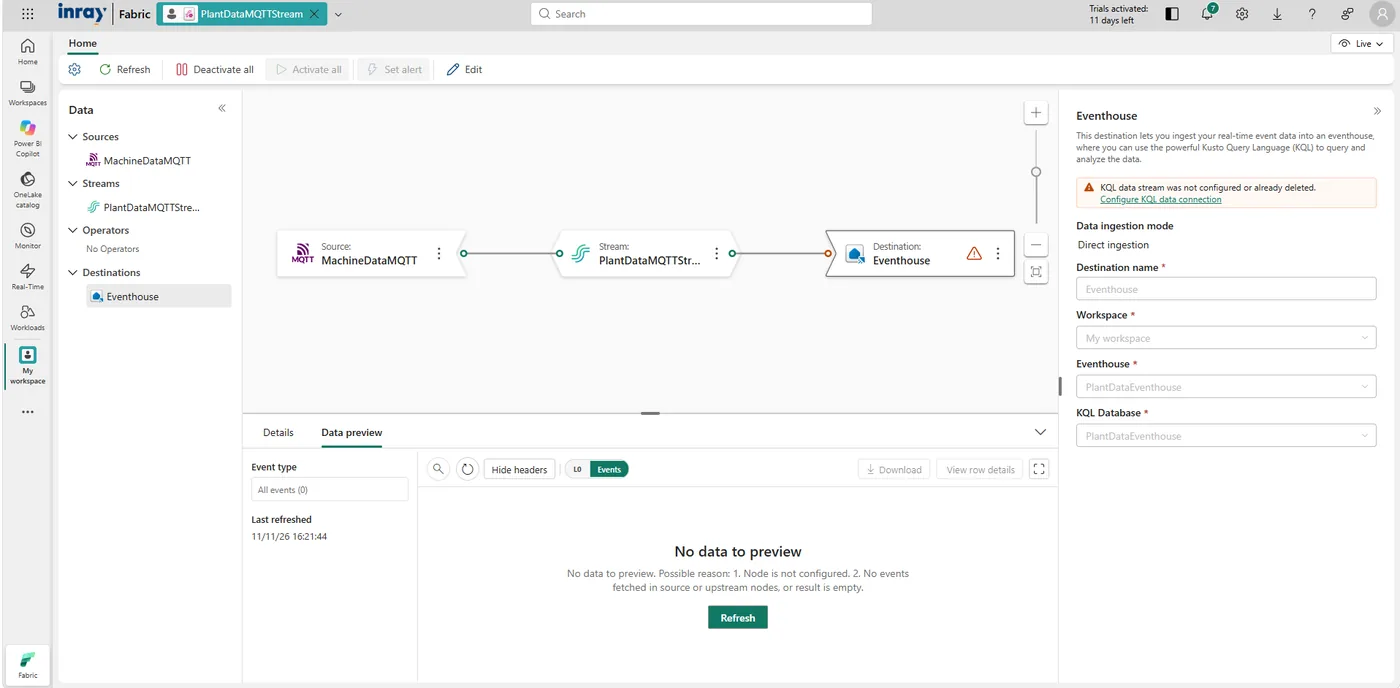
- Select Add destination → Eventhouse.
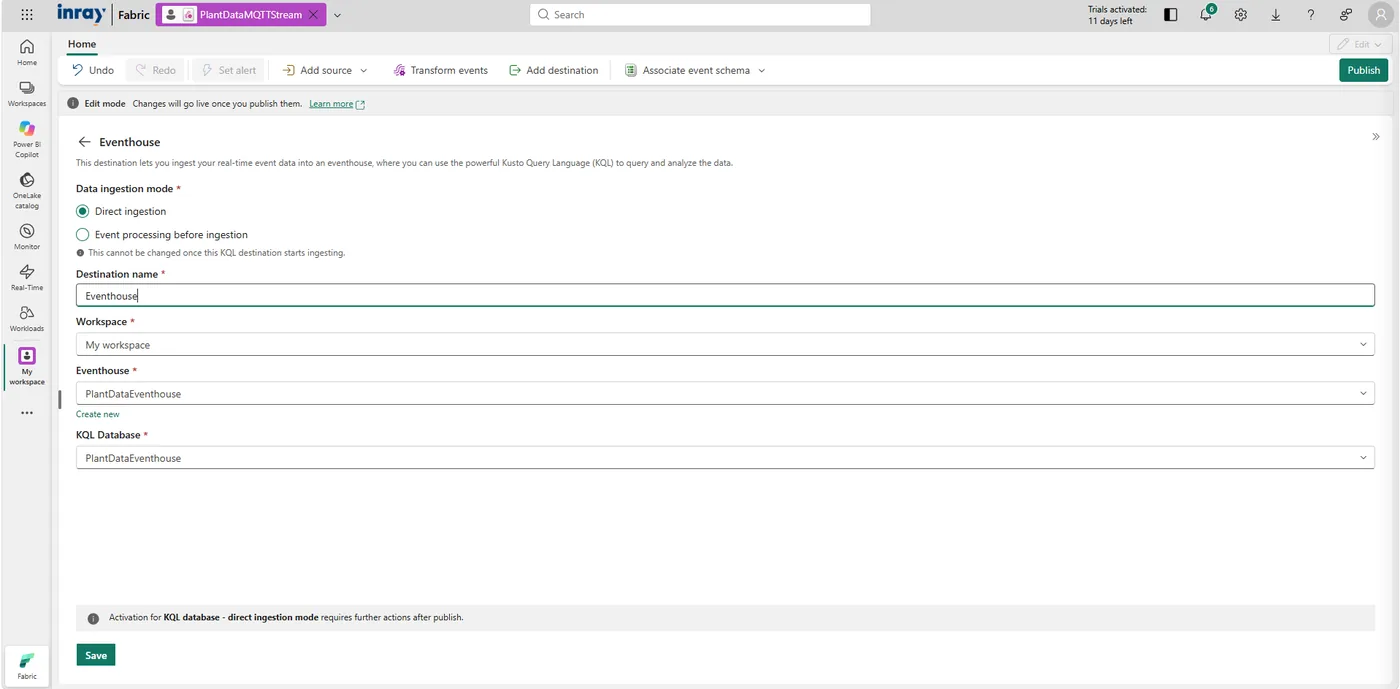
- Choose Direct ingestion for this example.
- Select the workspace and the previously created
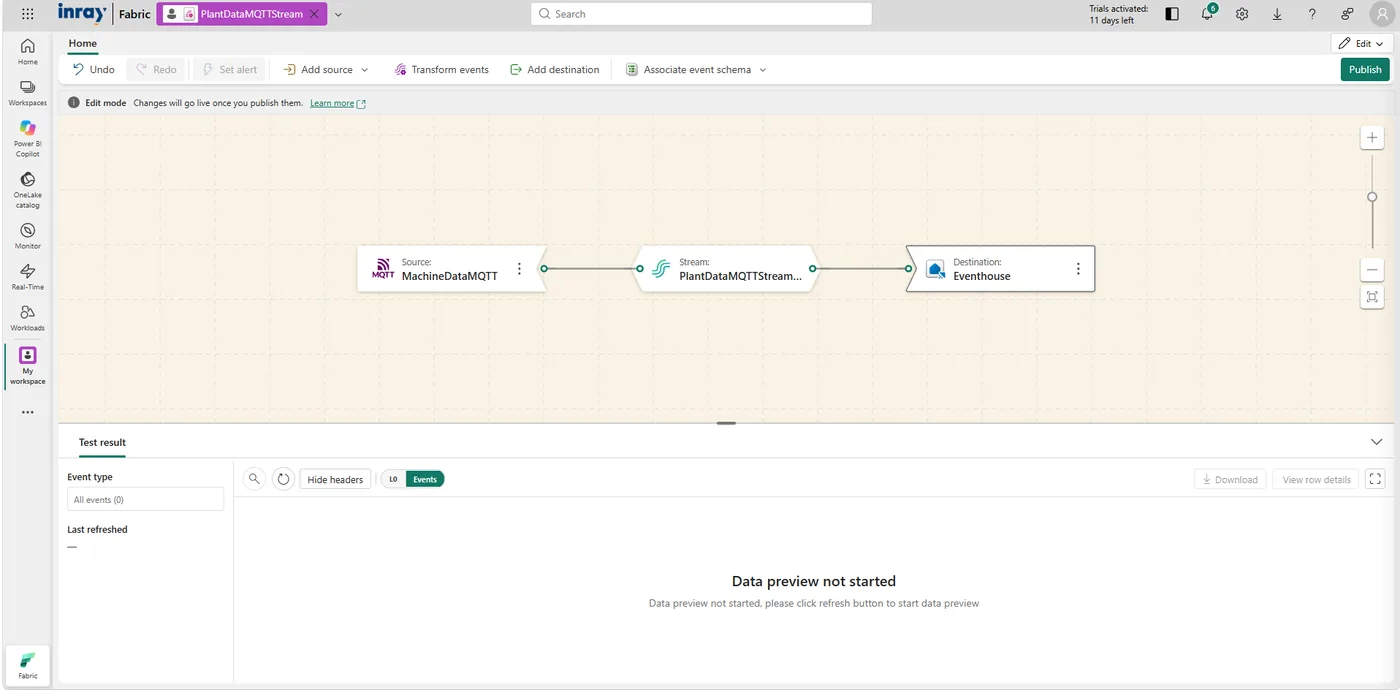
PlantDataEventhouse. - Save the destination, make sure it is connected to the Eventstream, and select Publish.
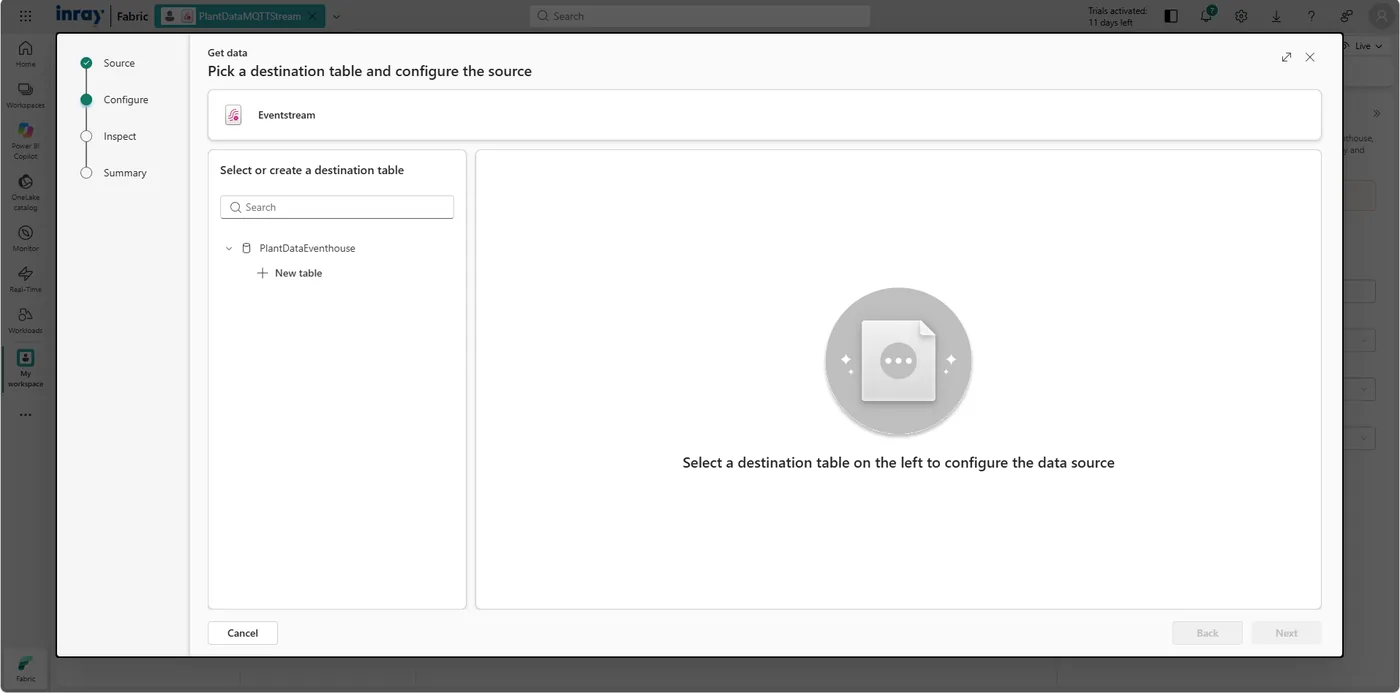
- Switch to Live view and select Configure on the Eventhouse destination.
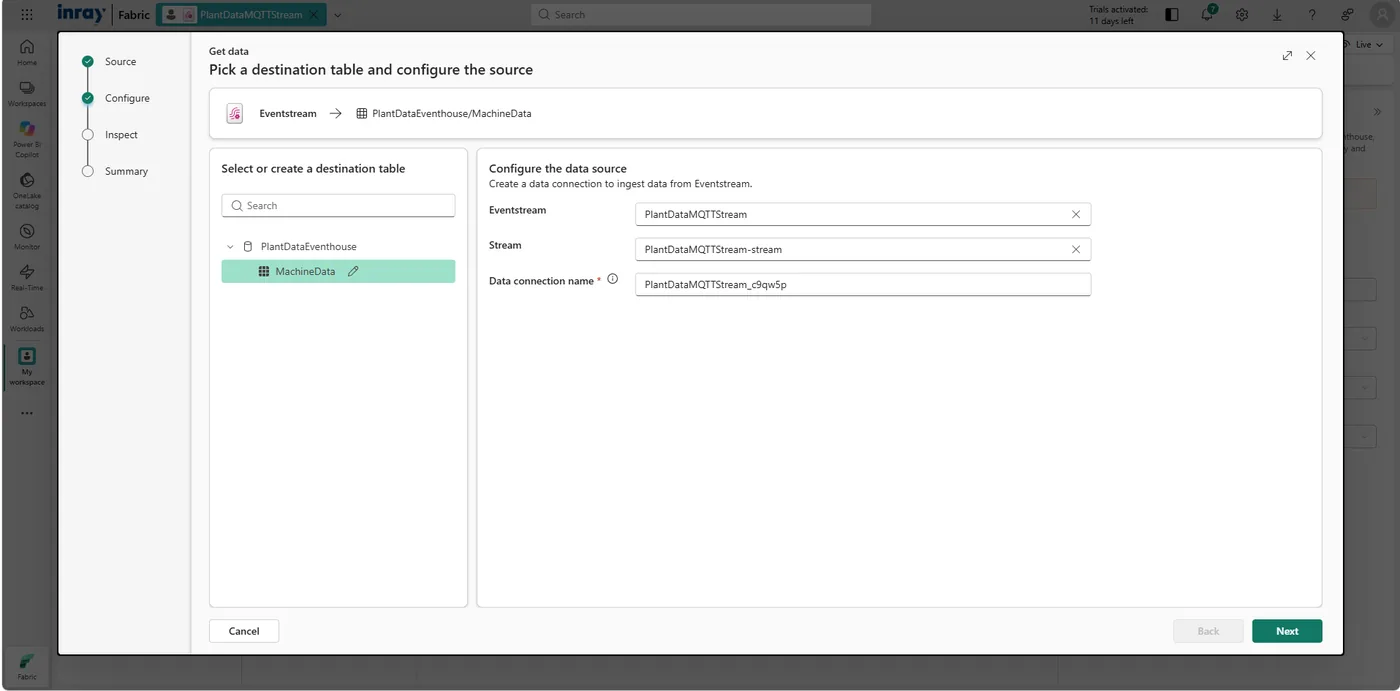
- In the wizard, select the KQL database and choose New table.
- Name the table
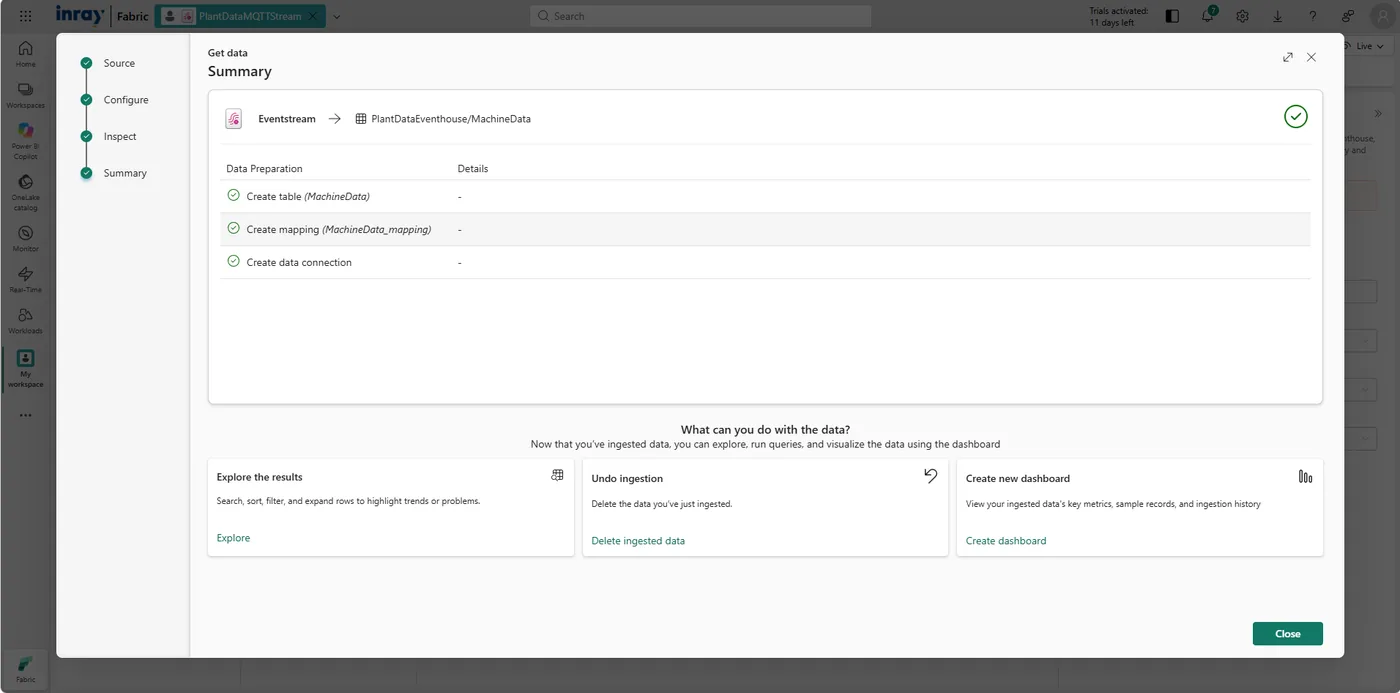
MachineData. - Inspect the incoming data, select the JSON format and verify the column mappings and data types.
- Select Finish to complete the setup.
The Eventstream now receives messages from the MQTT broker and stores them in the Eventhouse table.
Verify the data transfer
Finally, you check that the data arrives along the whole route.
Check the data in pronubes Edge and Fabric
- Activate or run the flow in pronubes Edge.
- Check in pronubes Edge monitoring that messages are successfully sent to the broker.
- Open the Eventstream in Fabric and confirm that events appear in the data preview.
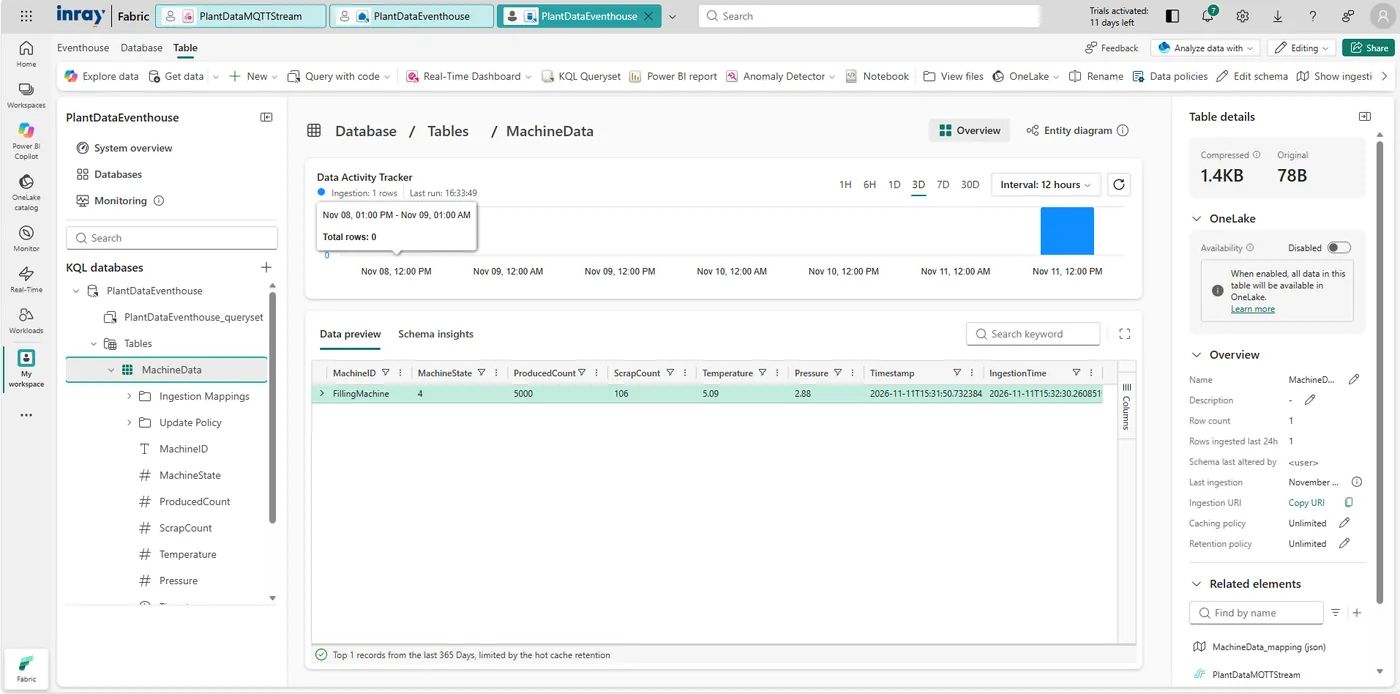
- Open the Eventhouse and select the
MachineDatatable.
If records appear with the expected machine values and timestamps, the integration is working.
Good to know
Notes and limitations
We help with the setup
You want to bring your machine data into Microsoft Fabric and have questions about your system landscape? Get in touch.
Common issues
No data arrives in the Eventstream
Check that the flow in pronubes Edge is live and successfully sends messages to the broker. Then compare topic and MQTT version in pronubes Edge and in the MQTT source of the Eventstream. Both must match exactly.
Fabric cannot connect to the broker
Fabric must be able to reach the broker. Check the broker URL with protocol and port, for example ssl://<broker-host>:8883, as well as username and password. A broker in a protected network needs additional network settings in Fabric.
The table stays empty although the Eventstream shows data
Check that the Eventhouse destination is connected and published and that you completed the wizard with “Finish”. With direct ingestion, this step is required after publishing.
Columns or data types do not match
In the wizard, select the JSON format and verify column mappings and data types against the sample data before you finish.