
Greenfield in IT and OT Transformation
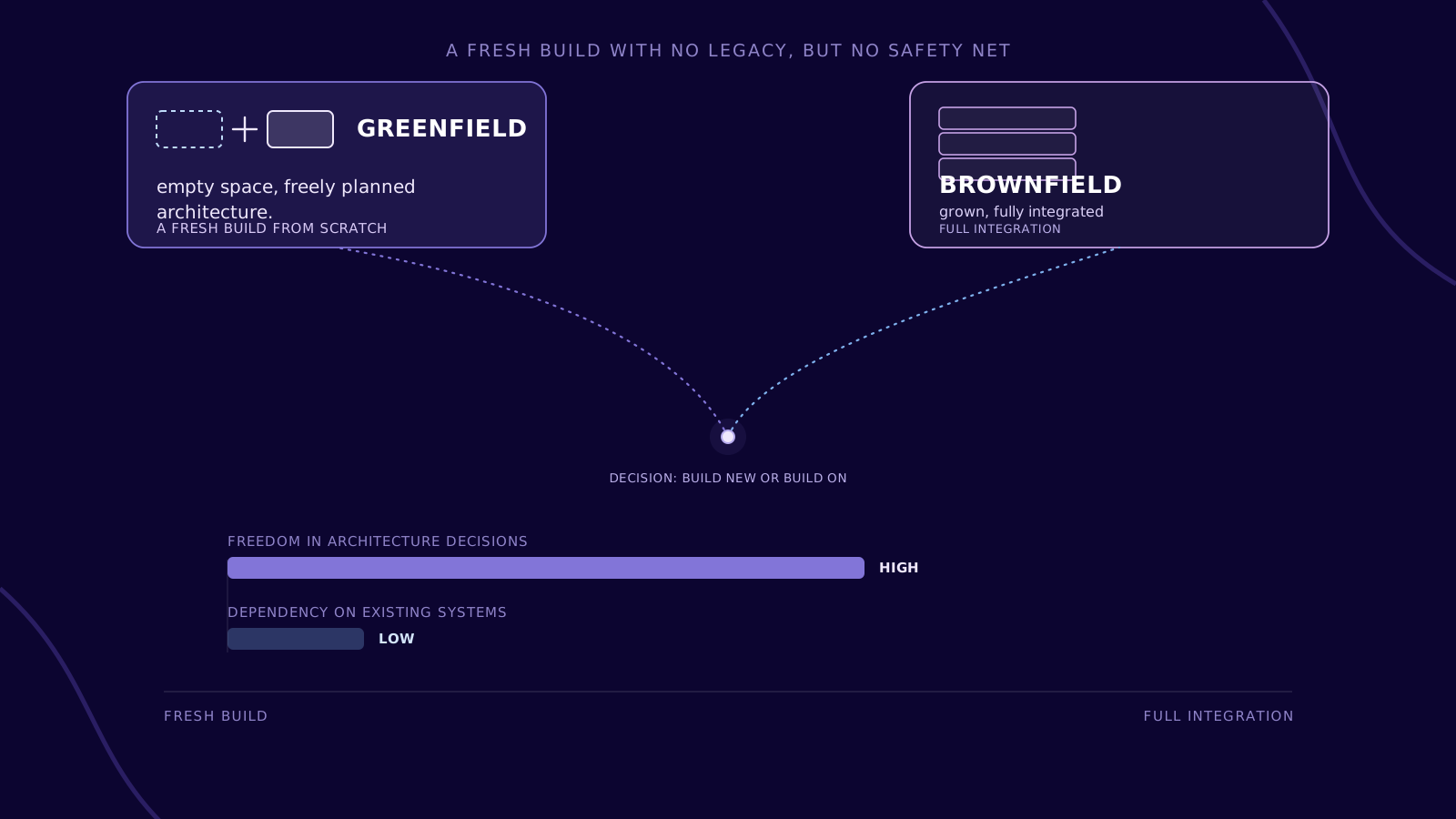
Greenfield describes building an architecture from scratch with no regard for what already exists — typically for a new plant, a new production line, or a site with no history. Unlike brownfield, there are no legacy systems to integrate, and unlike bluefield, there is no assessment of what to carry over — everything is planned from the ground up. That freedom is also the biggest challenge: with no existing system to serve as a reality check, every early decision carries through the entire lifetime of the build.
- What sets greenfield apart from bluefield and brownfield
- When greenfield is the right approach
- Four advantages of the greenfield approach
- From requirements to commissioning
- Success factors: planning, architecture, and discipline
- Implementation with pronubes
- Terms explained briefly
- Frequently asked questions
What sets greenfield apart from bluefield and brownfield
In IT and OT transformation, greenfield describes the extreme case with no history: a
new plant, a new production line, or a new site is built without having to account for existing systems,
processes, or data structures. At the other end sits brownfield, which modernizes inside a grown
landscape and has to plan around every existing dependency. Bluefield sits in between, assessing
each component individually for whether it gets carried over or rebuilt.
The decisive difference between greenfield and the other two approaches isn’t the amount of work, it’s
the absence of a reality check. With brownfield and bluefield, what already exists forces compromises — but it
also provides orientation: what works today doesn’t need to be reinvented. With greenfield, that reality check
is entirely missing. Every decision about the data model, network structure, naming, or integration patterns is made
without the grounding of a running system — and carries through the entire lifetime of the new facility as a
result.
Starting at zero means no
legacy baggage, but also no second chance — every architecture decision holds the moment the plant goes
live.
When greenfield is the right approach
Greenfield fits whenever there genuinely is no relevant history that would justify carrying anything over
— typically for a new plant or factory with no existing automation layer, a new
production line inside an existing facility that is deliberately built independent of the grown IT/OT
landscape, opening up a new site with no existing infrastructure, and building a new
platform for a business area that has nothing to do with existing systems.
The greenfield approach pays off especially where integrating with what exists wouldn’t bring any benefit
anyway — for example because the old facility is being decommissioned, or the new project sits in a completely
different technical environment. Here, trying to artificially maintain compatibility with legacy systems would be
pure extra effort with no payoff.
Not every project benefits from it. Where an existing facility keeps running and should be modernized step by
step, brownfield is the right path. Where part of what exists is worth keeping and another part isn’t,
bluefield is the closer fit. Greenfield is the right choice only where forgoing any consideration of what already
exists is genuinely an advantage — not just the more convenient starting point.
Four advantages of the greenfield approach
Forgoing consideration of what already exists brings four advantages that only fully play out in practice
when that freedom is actually put to use.
| Advantage | Effect |
|---|---|
| Maximum architectural freedom | Data model, network structure, and naming are planned consistently from the start, instead of adapting to grown compromises |
| No technical debt | There are no outdated interfaces, no inconsistent data formats, and no historically grown shortcuts that need to be carried along |
| Current standards from day one | Modern protocols, security concepts, and scaling patterns can be implemented directly, with no legacy systems to work around |
| A clear project scope | Without the need for an inventory of what already exists, the scope of the project can be clearly defined from the outset |
These advantages are not automatic. They only materialize if the freedom gained is put to structured use — a
target architecture built without clear principles produces just as much inconsistency as a grown system, only
faster. The next section shows how a greenfield project can be carried out in a structured way.
From requirements to commissioning
Successful greenfield projects go through four steps that build on one another and cannot usefully be
skipped.
Requirements answers what is actually needed — independent of any existing solution,
because there isn’t one to orient around. Target architecture answers how these requirements
fit together structurally: the data model, network zones, and integration patterns are defined here.
Build is the actual implementation: systems are installed, configured, and connected to one
another. Commissioning is the highlighted final step — start-up and handover into productive
operation, where it becomes clear whether the earlier decisions hold up.
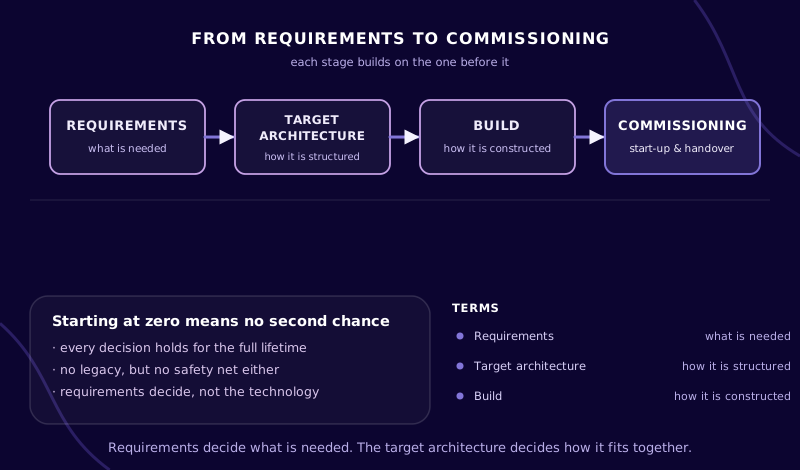
Starting at zero means no second chance — the requirements decide what is needed, the target architecture decides how it fits together.
Success factors: planning, architecture, and discipline
Whether a greenfield project succeeds comes down to three things. The first is planning:
because no existing system serves as a reality check, requirements analysis has to be unusually thorough — any
gap overlooked here only shows up once the system is live, when a fix is considerably more expensive.
The second is architecture: a target architecture that only fits the current scope becomes an
obstacle at the next expansion step. Scalability and uniform naming — as described in our articles on the
Unified Namespace and on IT-OT convergence
— keep the new, clean architecture from turning into a fresh collection of uncoordinated silos within a short
time.
The third is discipline: the freedom to redesign everything tempts teams to keep adjusting course
during implementation. Without clear decision paths and a binding framework, a disciplined fresh build turns into a
moving target that never gets finished.
pronubes brings an architecture designed from the outset for scaling and uniform naming, instead of having to
adapt to grown structures after the fact.
Implementation with pronubes
pronubes doesn’t make the architecture decisions for your fresh build — but the platform
delivers the infrastructure to implement a well-thought-out greenfield architecture cleanly from day one.
pronubes Edge connects machines, equipment, and systems through standard protocols — OPC
UA, MQTT, REST, SQL, file formats — and makes that connectivity consistent from the start, instead of
unifying it retroactively over the course of the project.
pronubes Zones provides uniform naming that applies from the very first facility —
keeping a greenfield project from turning, with every further expansion step, into a new version of the very
inconsistency greenfield was meant to avoid.
pronubes Insights makes it visible during the build itself whether data sources are delivering
consistently — the precondition for flaws in the target architecture surfacing before commissioning rather
than after.
The payoff of a greenfield project doesn’t show up in how quickly something new gets built, but in whether
the architecture decisions made still hold up years later.
- Greenfield
- Building a new architecture with no regard for existing systems, for example at a new plant, a new line, or a new site.
- Brownfield
- Modernization or extension of an existing system and data landscape, as opposed to building new.
- Bluefield
- Selective middle path between a greenfield rebuild and brownfield integration: existing components are assessed, some carried over, the rest rebuilt.
- Target architecture
- The structural target for data model, network zones, and integration patterns, defined before the actual build begins.
- Commissioning
- Start-up and handover of a newly built system into productive operation, where it becomes clear whether the architecture decisions hold up.
- Technical debt
- Cost and effort that arise when earlier decisions no longer fit current requirements — avoidable from the start in greenfield projects if the architecture is planned consistently.
Frequently asked questions
Is greenfield always the better choice over bluefield or brownfield?
No. Where an existing facility keeps running and should be modernized, brownfield is the right path, and where part of what exists is worth keeping, bluefield is the closer fit. Greenfield pays off only where there genuinely is no relevant history that would justify carrying anything over.
Why does planning matter more for greenfield than for brownfield?
Because there is no existing system serving as a reality check. With brownfield, ongoing operations immediately reveal a wrong assumption. With greenfield, a gap in the requirements analysis often only shows up after commissioning, when a fix is considerably more expensive.
Is a greenfield project cheaper than a brownfield modernization?
Not inherently. The effort of integrating legacy systems is eliminated, but every component has to be newly procured, built, and commissioned. Which approach is cheaper depends on the condition and scope of the existing landscape in question.
Can greenfield and brownfield happen in parallel within the same company?
Yes, and that’s actually the norm. A new plant can be built as greenfield while existing sites are modernized in parallel as brownfield. A detailed comparison of all three approaches is available in our article Greenfield, Bluefield, or Brownfield?
Which projects is greenfield particularly well suited for?
Typical use cases include a new plant or factory with no existing automation layer, a new production line built deliberately independent of the grown IT/OT landscape, opening up a new site, and building a new platform for a standalone business area.
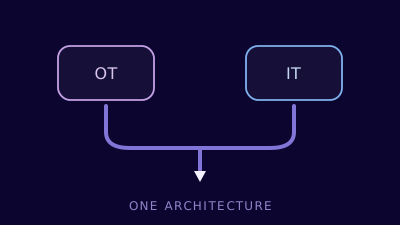
A new plant, a new line — an architecture that holds up from day one.
30 minutes about your plans: which target architecture makes sense for your fresh build — and how to get the early decisions right from day one.
pronubes is a product of inray Industriesoftware GmbH. Over 30 years of industrial software from Germany. Innovative and reliable for manufacturing companies.