
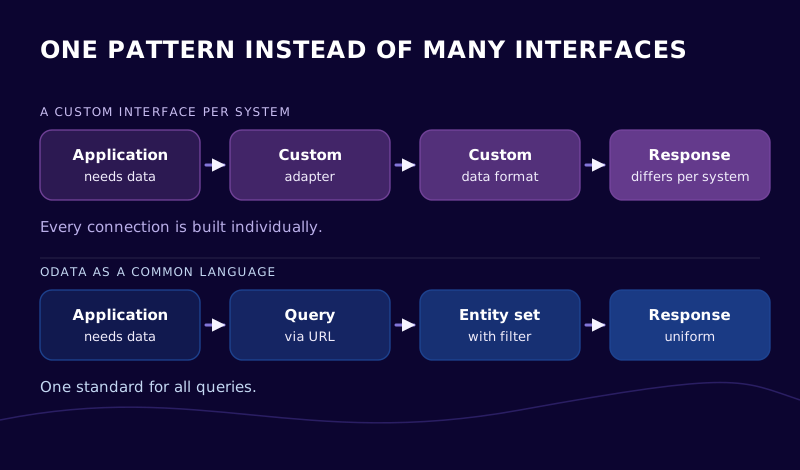
OData is an open, REST-based protocol that lets applications query and update data over HTTP. Each data source describes its own data model and understands the same standardized queries. That saves custom interfaces between ERP, MES and analytics, but it does not replace machine protocols or real-time data streams. OData stands for “Open Data Protocol”. It describes how data services are built in the REST style: clients read and change resources using ordinary HTTP messages, resources are addressed by URLs, and a data model describes which objects and properties exist. That is how the OASIS OData specification puts it. The practical gain lies in uniformity. If you know one OData service, you can use the query logic of a second one without learning anything new. The table compares OData with a custom-built interface. The idea of shared data access is older than the standard. In May 2012, Microsoft, IBM and others proposed an OData technical committee at the standards body OASIS, and Microsoft contributed seven specification components. OASIS approved OData 4.0 as a standard on 24 February 2014, and in 2016 it was accepted as ISO/IEC 20802. OData 4.01 followed on 23 April 2020. A back-of-the-envelope calculation shows why this matters for connections. Purely as an illustration: six systems that each talk to one another individually need up to 6 × 5 / 2 = 15 connections. If all six speak the same standard through a shared layer, it is six connections. The figures are a worked example, not a measurement from a project. OData is not a single document but a family of specifications. The overview lists the parts used most often in practice. Four mechanisms carry the standard. The sequence is similar for most connections. Which objects do you need, such as orders, materials or sites, and which properties are required for that? Retrieve the service document and Define filters and fields so that only the necessary data is transferred, and clarify authentication and permissions. Monitor response times and errors, and allow for the fact that the service’s model can change. Four distinctions prevent common misunderstandings. The hurdles rarely lie in the protocol, but in what is provided behind it. OData standardizes access, not the meaning of data. Two systems can both speak OData and still mean different things by “order” or “site”. That shared understanding has to be clarified by the business. pronubes does not do this for you and does not turn a poorly described service into a reliable one. For pronubes, OData is one possible way into source and target systems. The product parts take on different tasks. OData stands for “Open Data Protocol”. It is an open protocol with which applications read and change data over HTTP, based on a described data model. The standards body OASIS. A technical committee was formed there in 2012, OData 4.0 became a standard on 24 February 2014 and was later accepted as ISO/IEC 20802. Version 4.01 followed on 23 April 2020. No. OData builds on REST and HTTP but adds fixed rules for data model, query options and error handling. An arbitrary REST service does not follow these rules automatically. Rather not. OData works with request and response. For continuous events, protocols such as MQTT are better suited, and for the control level protocols such as OPC UA. OData fits business and master data above all. That depends on the implementation. OData uses HTTP, so protection comes from mechanisms such as HTTPS, authentication and permissions in the service. You should clarify both before connecting. pronubes connects machines, plants and systems through one shared architecture instead of interface by interface.What is OData and what is it used for in industry?
Definition: OData
Criterion
Custom interface
OData
Data model
Documented per project, often only in text
Machine-readable in the metadata document ($metadata)
Queries
Defined anew for each interface
Standardized options such as $filter, $select and $top
Transport
Arbitrary
HTTP with GET, POST, PUT, PATCH and DELETE
Standardization
None
OASIS standard, ISO/IEC 20802
Why a standard makes sense
What OData consists of
Building block
Purpose
Source
Protocol (Part 1)
Covers resource model, HTTP methods, service document, metadata, batch and change tracking
OASIS, 2020
URL conventions (Part 2)
Defines how sets, keys and query options are written in URLs
OASIS, 2020
Data model (CSDL)
Describes types, sets, relationships, functions and actions in XML or JSON
OASIS, 2020
JSON format
Defines how data is transferred as JSON
OASIS, 2014
How OData works technically
Products. A single record is addressed by its key in parentheses, for example Products(1).$filter narrows records, $select chooses properties, $expand includes related data, and $orderby, $top and $skip sort and page.$metadata describes the model. Batch requests bundle several operations into one call.Four steps to a connection
Clarify the data model
Check the service
$metadata. They show which sets and fields the service actually offers.Define queries and access
Operate and maintain
What OData is not
Typical hurdles in practice
$expand across many relationships, which raise response timesHow pronubes helps
Frequently asked questions
What does OData stand for?
Who standardizes OData?
Is OData the same as REST?
Is OData suitable for real-time machine data?
How secure is an OData service?
Uniform data access starts with a shared architecture, not with the next single interface.
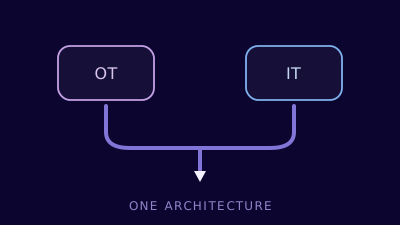
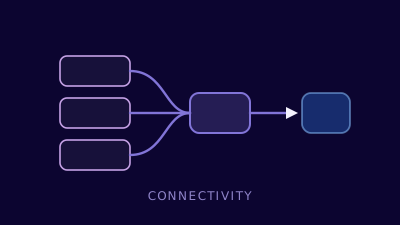
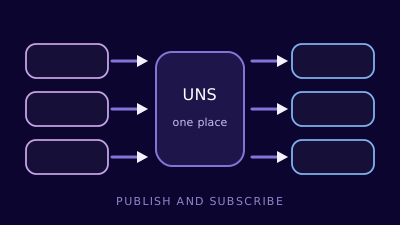
pronubes is a product of inray Industriesoftware GmbH. Over 30 years of industrial software from Germany. Innovative and reliable for manufacturing companies.